Modern Portfolio Management: Multi-Asset Diversity for Risk Management
At Montecito Capital Management, we have a very rich heritage in both passive and active multi-asset investing, including equity, fixed income, and liquid alternatives.
We combine decades of institutional expertise with personalized, client-focused portfolio management. Led by Kip Lytel, CFA, whose career spans leadership roles with multi-billion-dollar firms and extensive experience across global markets, our team brings a level of rigor, discipline, and insight often reserved for the world’s largest institutional investors.
Equity, bonds, alternatives
Dynamic allocation adjustments
Diversification and rebalancing
Transparent custody access
Strategic Sophistication With Practical Execution
This depth of experience informs every recommendation and decision, ensuring that our clients benefit from both strategic sophistication and practical execution.
With thoughtful risk management, advanced asset-class expertise, and investment selection led by a premier modern-finance thought-leader, we deliver strategies that effectively solve for today’s most pressing headline challenges.
We believe skilled financial advisors can add investment value in three active strategy disciplines: asset class construction, security selection, and dynamic adaptive allocation adjustments.
Montecito Capital Management’s focus is on the active management of multiple investment asset classes based on modern portfolio practices, relative valuations, and economic and market prospects.
We subscribe to managing dynamic factor exposures while still delivering broadly diversified, economically representative portfolios.
Modern Portfolio Management
Multi-asset diversity for disciplined risk management.
Built to Grow Capital, Defend Wealth, and Stay Liquid
True wealth is not just built. It is defended.
At Montecito Capital Management, our investment approach is an actively managed, all-weather strategy designed to grow capital across market seasons while helping protect wealth from major drawdowns.
We build broadly diversified, economically representative portfolios using liquid asset classes. Every position is transparently priced, daily-tradeable, and purposefully selected to serve a defined role.
Growth Drivers
Long-term return performers.
Risk Anchors
Hybrid Assets
Diversifiers
Deliberate, diversified, risk-aware.
Core equity exposure may include individual stocks, index ETFs, equity mutual funds, put-write strategies, and structured equity loss buffer ETFs. This is paired with liquid alternatives, selected gold and multi-asset exposure, and diversified fixed income.
Designed so something is always working
Focused on genuinely low correlations
Built around rates, inflation, growth cycles, and global shocks
72–78%
10–15%
Potential downside buffer range.
25–30%
Liquid alternative allocation range.
43%
Gain needed after a 30% loss.
Investing is about probabilities, not predictions.
We adjust portfolio exposure based on forward-looking views of the economy, valuations, and fiscal-monetary policy. We avoid overconcentration, hold positions with real return potential or genuine diversification value, and rebalance tactically with attention to tax efficiency. Assets are custodied at Charles Schwab Institutional, giving clients ownership, visibility, and transparency.
Investment Approach Topics
Use these sections to review the full portfolio management framework.
Goals Drive Asset Allocation Decisions
While there are a number of effective multi-asset portfolios that have produced successful long-term results, the key is to find and implement a strategy that best fits a client’s unique objectives, needs, and risk tolerance.
This is why we build multi-asset portfolios that align with each client’s specific goals.
We design client portfolios to look beyond macroeconomic headlines and seek out bright spots across multi-asset classes that stand to benefit from evolving opportunities within the global investment landscape.
In conjunction with advisor-identified opportunities that align with the current investment climate, our clients’ goals, and not the market, drive our asset allocation decisions.
The merits of multi-asset investing include taking advantage of cross asset class opportunities to help in both adding return potential and managing risk. This gives investors an improved framework to think of a portfolio in its totality.
Active Strategy Disciplines
Asset class construction
Security selection
Dynamic adaptive allocation adjustments
Modern portfolio practices
Relative valuation review
Economic and market prospect analysis

Managing Risk: Rise of Liquid Alternative Investments
There has been a notable rise in investor interest in alternative liquid investments, driven by the desire for enhanced downside protection and unique market exposures.
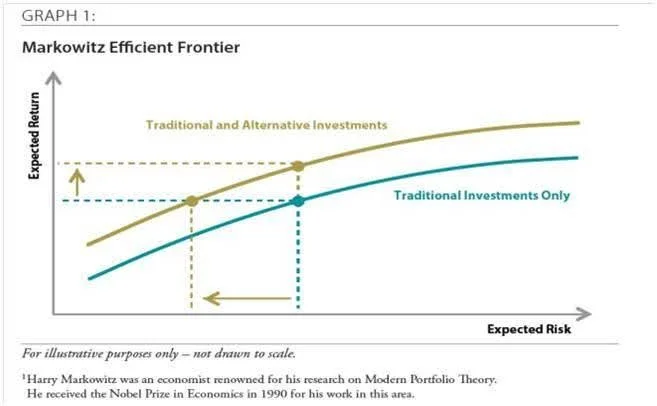
At the same time, elevated starting valuations, tighter spreads, and a persistently positive stock-bond correlation continue to flatten the efficient frontier, reducing the effectiveness of traditional portfolio diversifiers.
Liquid alternatives, or liquid alts, are mutual funds or exchange-traded funds that employ alternative investment strategies while remaining within regulated investment vehicles.
They must provide daily liquidity, transparent pricing, and regular disclosure of holdings. Liquid alternative assets employ strategies designed to achieve absolute returns, aiming for positive performance regardless of broader market conditions.
For investors, liquid alts can offer meaningful portfolio benefits by combining hedge fund-like strategies with the accessibility, fee clarity, and liquidity of traditional funds.
We assert that liquid alternatives may be instrumental in tackling the diversification issue created by elevated valuations, tighter spreads, and positive stock-bond correlations.
Building Resilient Multi-Asset Portfolios to Reduce Volatility
Understanding risks embedded in a portfolio is central to providing value to clients.
It is our philosophy to build diverse, multi-asset portfolios in an effort to capture long-term positive returns while having resilient portfolios that may help weather future volatility.
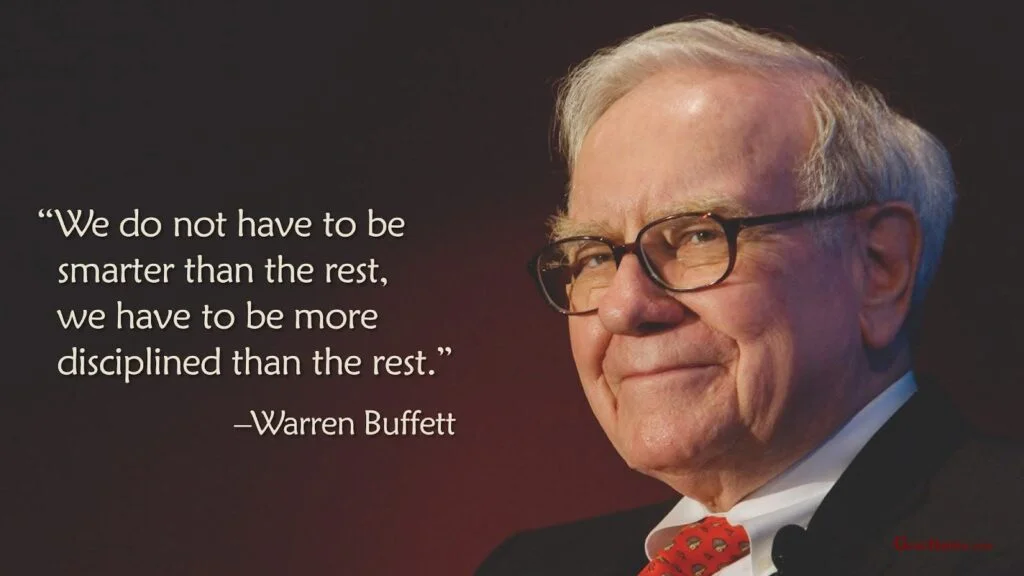
We think of investing in terms of probabilities instead of binary outcomes. We subscribe to Warren Buffett’s mantra that investors do not have to be smarter than the rest, they have to be more disciplined than the rest.
Investing is not about timing market tops or bottoms. It is about understanding and acting on whether there are more positive investment opportunities than negative opportunities, then allocating investments within that risk-reward framework.
Probability-Based Thinking
Portfolio decisions are framed around risk and opportunity rather than binary market calls.Acting as a strategic CFO and capital allocation partner.
Long-Term Positive Returns
Multi-asset portfolios are built to pursue durable returns across changing environments.
Volatility Awareness
Risk controls are designed to help reduce the impact of adverse market conditions.
Our Guiding Principles for Portfolio Management
The basic principles we apply to manage financial assets are to never over-concentrate allocations to any one investment, only hold investments that offer either the prospect of reasonable return or diversify and mitigate risk, and accept that financial markets can behave in ways that confound the majority of investors.
These principles are guided by the importance of portfolio diversification, maintaining reasonable expectations, and avoiding the latest fads.
We employ asset diversification strategies to manage risk, but this does not guarantee against loss. Rather, it is designed to help mitigate the magnitude of potential losses.
Investors need to understand and accept the reality that there is a trade-off between portfolio growth, income, and risk.

Employing Diverse Tools to Navigate Market Volatility
In a world of persistent volatility, higher-for-longer rates, and shifting stock-bond correlations, traditional portfolio construction is under pressure.
We believe portfolios should include asset classes that react differently to different economic environments, with a diverse mix of holdings to help insulate portfolios from unexpected negative market events.
A sampling of asset classes may include stocks, preferred shares, diverse types of domestic and international bonds, convertibles, REITs, liquid commodities, liquid precious metals, MLPs, liquid timber and farming, and liquid alternative strategies.
Assets, Securities, Expectations and Risk-Adjusted Return

Return
Each asset class is evaluated for return potential and its role in the portfolio.
Risk
We assess volatility, downside exposure, and how risk changes in different market environments.
Correlation
Correlation helps determine whether an asset class truly improves diversification.
Liquidity
We consider how easily assets can be traded or accessed when markets change.
Tax Implications
Potential tax effects are considered when designing and adjusting portfolios.
Macro Sensitivity
We review sensitivity to inflation, rates, economic cycles, and broader conditions.
Our portfolios employ passive low-cost investments together with active management strategies. We apply different asset classes, each playing a specific role: longer-term return performers, shorter-term risk reducers, hybrid investments, and diversifying liquid alternative strategies.
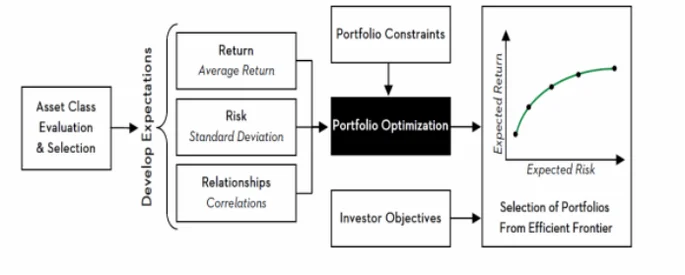
We evaluate asset classes by focusing on three characteristics: return, risk, and correlation. This provides a framework to manage the inevitable trade-offs in asset class selection.
Portfolio management, viewed through mixed asset classes and efficient frontier risk-return optimization, is about strategically balancing different asset classes to maximize returns for a given level of risk.

Robust, Forward-Looking Investment Strategy
Advisors need to think qualitatively about what the future may hold for different types of investments, how asset classes may be impacted by that forecast, how it will affect the investor, and how to invest in light of these forward-looking views.
A value-added advisor should not only actively strategize and take diligent portfolio actions to maximize potential gains based on current economic and capital market prospects, but also seek to protect capital from downside risk.
Global economies, markets, and risks are not homogenous and experience upward and downward cycles. Portfolio adjustments should position clients for the greatest probability of success given the current investment environment.
We Execute Tactical Portfolio Adjustments
As long-term investors, we consider short-term price volatility as an opportunity and high price valuations as risk.
For clients who choose more aggressive portfolios, investment outcomes become less predictable. Well-performing asset categories can become a larger percentage of the portfolio than originally planned, increasing overall risk.
To counteract this, we periodically rebalance non-discretionary client portfolios to bring investments back to target allocation and assure portfolios remain well-diversified. Rebalancing is done in a way designed to minimize taxes and transaction costs.
Importance of True Diversification & Rebalancing
Diversification means strength through variety. If each component of a portfolio does the same thing, then the portfolio is no stronger than any one component.
Not all elements of a portfolio are going to perform the same, nor should they. That reflects strategy, asset-class diversification, risk management, and defensive planning.
True diversification combines assets that behave differently under various market conditions, reducing overall risk while preserving potential growth.
Approaching Retirement, or Retired: The Most Important Portfolio Risk Is Time
If you are retired or near retirement, a well thought out portfolio adjustment plan and sell discipline becomes increasingly important.
Most investment advisors are not portfolio managers. A large body of advisors profess the success of buy-and-hold strategies and do not actively manage assets.
Your nest egg is likely a major source of retirement livelihood. Upon retirement, you may begin taking income from the portfolio based on needs and what the advisor believes is prudent.
This reverse dollar-cost averaging often occurs when there is no longer the luxury of a long-term investment horizon. The most important risk in the portfolio is time, particularly the decay of opportunities for greater total return or recovery from market loss.
Avoiding One-Sided Market Narratives
Many advisors offer misleading facts, such as the idea that missing the 10 best days of the stock market over 30 years would produce negative returns. That may be true, but it is one-sided and fails to consider what happens if an investor misses the 10 worst days.
One study shows missing the 10 worst days more than triples a buy-and-hold strategy, but both arguments are flawed and misleading.
The point is that investors need a long-term investment plan with a disciplined strategy to make portfolio outcomes meet their own specific goals.
Defined Process Over Market Guesswork
Former NBA rebounder Antonio Davis once said it is fool’s gold if you are winning games and not playing the right way. In investing, playing the game right means having a defined, thoughtful process to increase the likelihood of long-term positive portfolio outcomes.
A multiple-asset class strategy is often like a tortoise-and-hare story. Single-asset classes may lead in shorter periods, but a multi-asset framework is designed to run more consistently over the long run.
When stocks lost value in the 2000-2002 and 2008-2009 bear markets, retirees with properly diversified assets, including future income set aside in maturing bonds, were not forced to sell shares at those levels.
Managing Portfolio Risk: Containing Negative Returns
Another element of portfolio risk important to investors is the possibility of experiencing negative returns. Investors should focus primarily on the portfolio as a whole rather than individual components that will experience losses from time to time.
Total return includes income or yield and capital appreciation. These two factors play different roles in different market environments. Income is generally more predictable, while capital appreciation may be subject to volatility.
The goal is an optimal combination of many asset classes with diverse size, sector, and country exposures. Some may move independent of markets, some may perform better in down markets, some may move relative to economic cycles, and others may correlate with inflation or interest rates.
Portfolio diversification may help reduce risk, and the lower the correlation between returns from different securities in a portfolio, the greater the diversification benefit.

Lowering Portfolio Expenses With Prudence
To lower portfolio expenses, we utilize individual stocks, individual bonds, and exchange-traded funds for a portion of pure equity and fixed income classes. We then apply macro and fundamental analysis to overweight countries, sectors, or yield curve segments.
However, using passive, low-cost exchange-traded solutions must be executed with prudence. Blind use of ETF passive benchmarks can be dangerous when herd behavior leads to holdings in trendy companies with market values disconnected from intrinsic value.
Revisiting the Role of Liquid Alternative Assets
Increased volatility, limited growth opportunities, and a low-return fixed income environment are reasons advisors have been adding alternative assets, including REITs, option protection, and absolute strategies, into portfolios.
Liquid tradable alternatives can broaden diversification and give investors a risk-return profile different from equities, bonds, or cash. Flexibility to use modern investment tools enables managers to go beyond traditional exposure methods.
Visualizing Diversification, Efficient Frontier and Asset Class Rotation
The original page includes several important visual charts. This redesign keeps them visible and readable instead of dropping them.
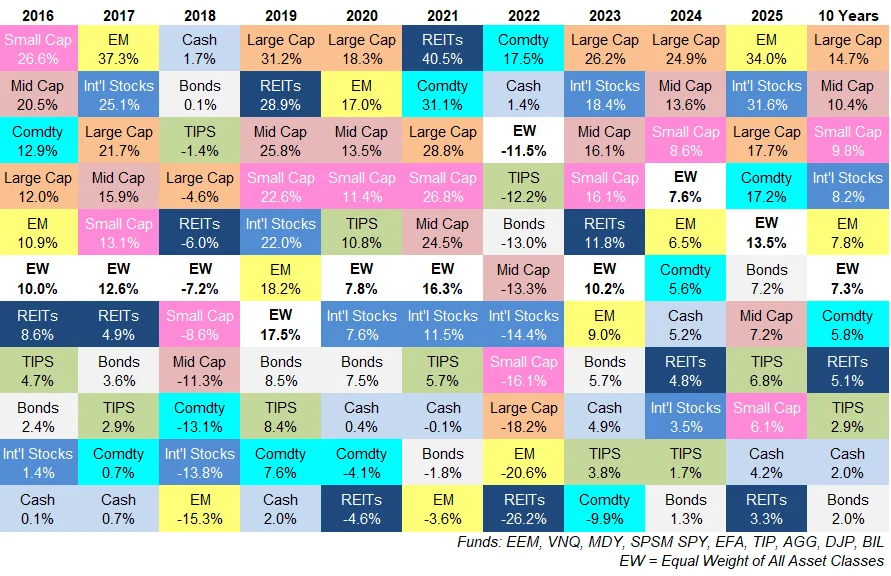
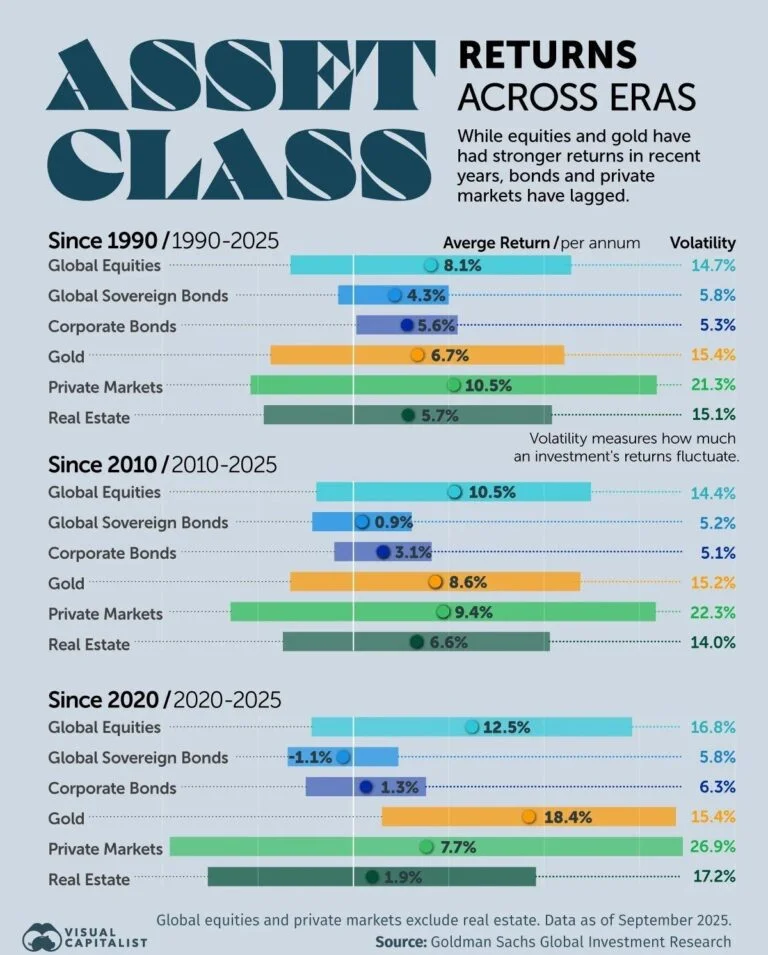
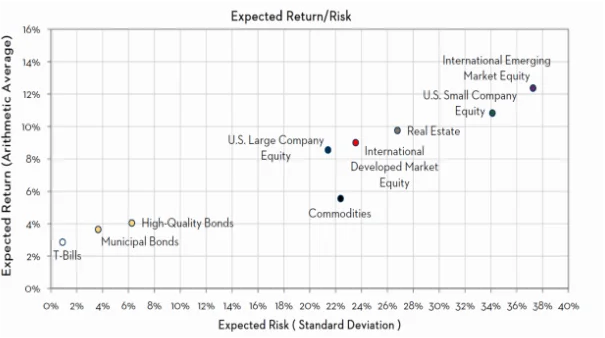
Below the surface, asset-type performance leaders change year to year. No amount of skill or experience has enabled anyone to forecast exactly how various asset classes will stack up in any given year.
While we may overweight and underweight asset classes based on prospective investment environments, those who try to time markets usually underperform. A balanced mix of assets can lower overall volatility.
In general, equities do well in high growth and low inflation environments, bonds do well in deflationary or recessionary environments, and commodities or hard assets tend to perform best during inflationary environments.
The same principle applies within a diverse multi-asset framework, using an optimal combination of many asset classes with unique historical returns and risks.
Rather than attempting to be right, we focus on reasonable portfolio returns and believe it is more efficient to mitigate risk with diverse asset classes.
Charles Schwab Institutional Custody
As an institutional custody affiliate of Charles Schwab, our services provide full transparency, 24/7 online client access, safe asset custody, third-party statement reporting, and a low fee-oriented platform.
Contact us for a complimentary consultation: (805) 965-7955
Email: ContactUs@McapitalMgt.Com
Investment Managers & Money Managers serving San Luis Obispo County, Santa Barbara County, Ventura County, Los Angeles County & Orange County.
The website provides general information regarding our business along with access to additional investment related information. Material presented on this website is believed to be from reliable sources and is meant for informational purposes only. The intent is to provide helpful information, which should not be construed as investment advice.
We do not guarantee accuracy or completeness, and the material is not intended to be the primary basis for investment decisions.
We do not make personal investment recommendations except to those who have engaged us expressly for professional investment advisory services. Investing involves risk and possible loss of principal capital. Montecito Capital Management Group’s ADV filing is available online at adviserinfo.sec.gov.
We are limited in our fiduciary capacity by the firm’s non-discretionary client relationship, whereby the client dictates the investment parameters and contractually agrees to accept sole responsibility for their choices.
Trusted Guidance for Long-Term Financial Success
Every client has a different financial picture, but the need for clear advice, disciplined planning, and dependable support remains the same.
Posted on GoogleTrustindex verifies that the original source of the review is Google. Our family has worked with this financial advisory firm for several years, and the experience has been outstanding. They take the time to truly understand our goals and explain everything clearly, without jargon. Their guidance has helped us feel confident about our investments and long-term plans. Highly recommend them for anyone looking for trustworthy, personalized financial advice.Posted on GoogleTrustindex verifies that the original source of the review is Google. I've worked with my advisor for several years now and the difference in my financial confidence is night and today . They take the time to understand my long term goals explain strategies clearly and consistently follow through from investment management to financial plan and estate coordination kip has brought structure and clarity to every part of my financial picture. I've never felt rushed or sold to just genuinely advised. Highly RecommendedPosted on GoogleTrustindex verifies that the original source of the review is Google. I used to feel scared tax season and wasn't sure whether my investments were even working for me. The advisor looked at everything found costs didn't know i was paying and cganged my portfolio so that it was based on long term goals instead of short term trends. What i liked best was how they kept teaching me as we went along. Clarifying each choice until it made sense. For the first time in years i feel like i have everything togather am sure of my self and am in chargePosted on GoogleTrustindex verifies that the original source of the review is Google. Kip is highly qualified, knowledgeable and responsive. It's reassuring to wealth advisor I have confidence in.Posted on GoogleTrustindex verifies that the original source of the review is Google. Very hands-on, knowledgeable and well-thought out investment (& retirement) planning. The fees are fair, and lower than the others advisors I met during my vetting process. I like that Kip Lytel, my advisor, is always very responsive and actively tracks economic data, earnings, stocks, bonds, valuations, politics and everything that might impact my portfolio. Happy with results!Posted on GoogleTrustindex verifies that the original source of the review is Google. An overall amazing advisory firm.Posted on GoogleTrustindex verifies that the original source of the review is Google. Outstanding advisory experience. Very patient, good returns overall and helps with my other asset decisions.Posted on GoogleTrustindex verifies that the original source of the review is Google. Truly excellent investment advisory services. Kipley and the team have an incredible depth of knowledge, and it shows not only in their performance, but in their frequent articles and newsletters, and their clear, understandable responses to questions. I've never been anything less than satisfied.Verified by TrustindexTrustindex verified badge is the Universal Symbol of Trust. Only the greatest companies can get the verified badge who has a review score above 4.5, based on customer reviews over the past 12 months. Read more
We Would Love to Have You Visit Soon
Hours: M-F: 6:30am-6:00pm
Telephone: 1-805-965-7955
Email: contactus@mcapitalmgt.com
Serving Santa Barbara County & Ventura County
Address: 225 East Carrillo Street, Suite 203
Santa Barbara, CA 93101
Serving Los Angeles County & Orange County
Address: 522 South Sepulveda Boulevard, Suite 207
Los Angeles, CA 90049
Build a More Disciplined, Diversified Investment Approach
Schedule a complimentary consultation to review portfolio structure, risk management, asset allocation, and long-term investment strategy.